Choose a manageable section
Use the Foundation’s maps to identify your start, finish and overnight stops. Allow for climbing, loose surfaces and stops. A town-to-town distance is not a suggested first-day target.
Leave better prepared / Equipment guides
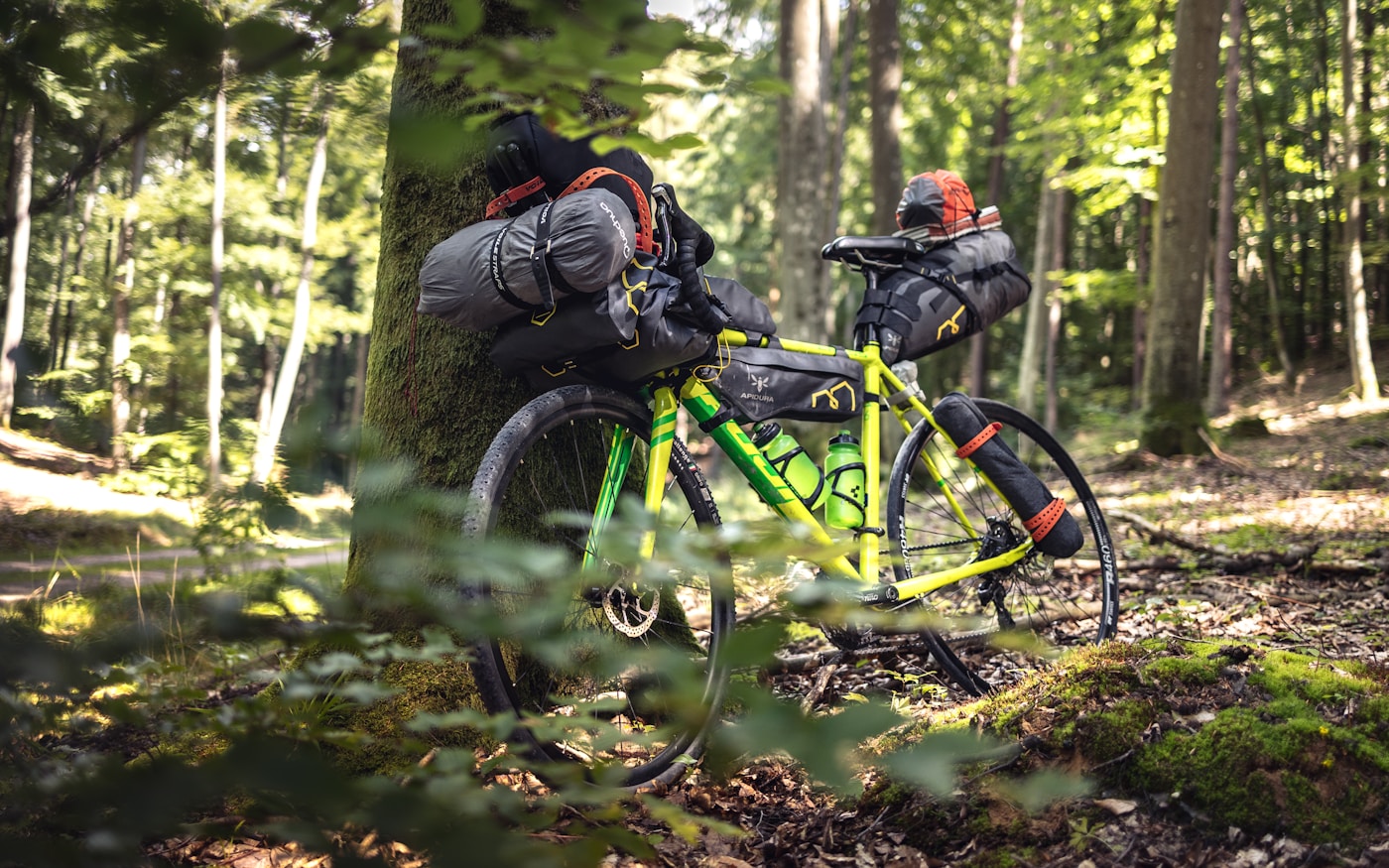
Choose a carrying system around your bike, your load and the nights you plan to spend outside.
Base Camp editorial guide · Reviewed 20 September 2026
Plan the local part
Pick the riding section and your overnight stops before deciding on bag capacity. Set up your navigation before the trip and test it on a short ride. Use the Foundation’s navigation page for current paper-map, app and GPS options.
The trip before the kit
Plan the ride with the bike loaded. Your usual day-ride distance may feel very different with food, water and camping equipment.
Use the Foundation’s maps to identify your start, finish and overnight stops. Allow for climbing, loose surfaces and stops. A town-to-town distance is not a suggested first-day target.
Try the actual load on a short ride, then a short overnight trip. Check steering, braking, bag movement and whether you can reach food and water without unpacking everything.
Check supplies and opening hours before relying on a town stop. Arrange return transport, including whether your loaded bike can travel. Share your route and overdue arrangements with someone at home.
There is no useful universal target. Start with your loaded-bike experience, terrain, daylight and the slowest rider. Leave time for mechanical problems and choose an easier first overnight trip.
No. A touring itinerary and a dedicated downhill trail ask different things of you and your bike. Check the actual section and technical features rather than assuming every trail near Dwellingup suits a loaded bike.
Do not assume it will. Check current DBCA alerts and the Foundation’s navigation advice separately from your saved route.
Source-checked 20 September 2026. Check current notices before travelling; this is planning advice, not a surveyed route.
Pack, check, go
Adapt this to your route, group and conditions. Ticks stay on this page until you leave or refresh.
0 of 13 checked
Lay out your sleep system, food, water and clothing before buying bags. Pack what you already own, then identify the items that do not fit. A larger bag is not always the answer: separating bulky sleep gear from things you need while riding can make the setup easier to use.
Measure the inside of the frame triangle and note bottle positions, cables and suspension movement. Check rack mounts, tyre clearance and the manufacturer's load limits for the exact bike and carrying system. Bring your bike model, frame size, measurements and photographs when asking about compatibility.
Give food, a weather layer and navigation their own accessible places. Consider whether a frame bag removes space you currently use for bottles. Test that you can reach your water and that loaded bags do not interfere with steering or pedalling.
Compare packed dimensions as well as weight. Shelter, mat, sleeping insulation and dry storage must work together and fit the available carrying space. A short loaded test ride and an overnight equipment trial reveal problems before a longer trip.
Use the Munda Biddi Foundation's official planning and navigation resources for the route itself. This guide is a buying checklist, not a complete expedition or mechanical-preparation list. Arrange bike servicing and repair preparation with a suitable bicycle workshop; Base Camp is not a repair workshop.
Do not assume it will. The Foundation warns that downloadable route files do not incorporate temporary diversions. Check DBCA Park Alerts and official navigation advice, and review the route information before leaving.
There is no single limit that applies to every setup. Check the bike’s total system limit, rack and bag limits, and any mounting restrictions. Include the rider and all equipment where the manufacturer specifies a total system weight. Weigh the loaded setup and test steering, braking and tyre clearance before a longer ride.
Check the bike model and frame size, frame material, suspension travel, mounting points and bottle access. With bags loaded, check cables, pedals, knees, wheels and dropper-post clearance. Follow the exact manufacturer’s compatibility instructions; a bag volume alone cannot establish fit.
Explore our brands and shop selected equipment online. Check product pages for current options and availability. Our physical store at 2 Marinup Street is opening soon.
Shop selected gear online. Our physical store in Dwellingup is opening soon; contact us before travelling for a specific item. Tell us what you already own, what you plan to do and what is not working for you.
Ask about your equipment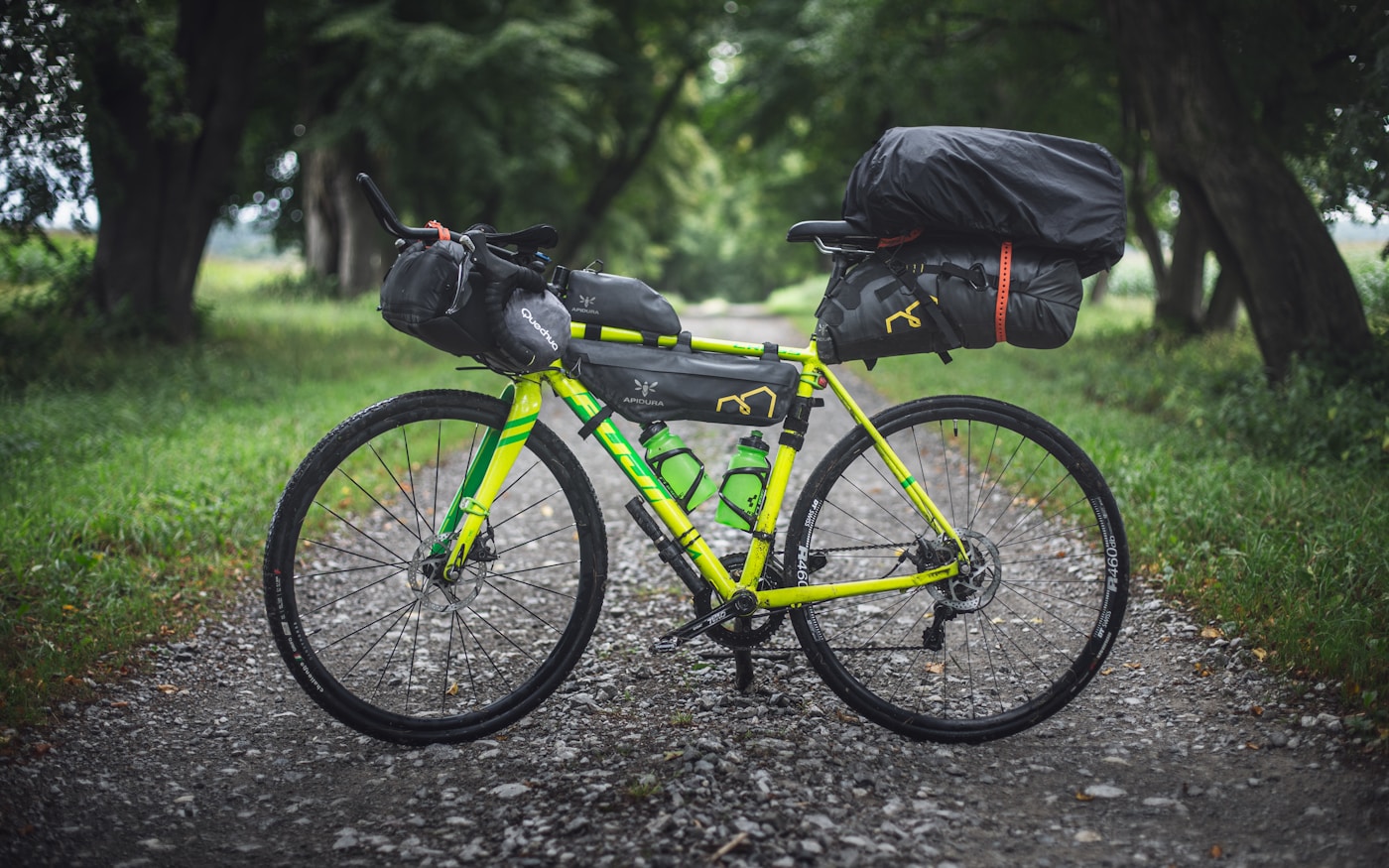
Explore the range / Bikepacking
Build your carrying system around the bike, the load and the nights away.
Useful gear for this trip
Check each product page for current options and availability. The physical store is opening soon; contact us before travelling.