Chuditch
Bookings are essential. Sites are unpowered, with pit toilets and a dining shelter. Bring drinking water: seasonal rainwater is not guaranteed and needs treatment. Campfires are not allowed at any time.

Leave better prepared / Equipment guides
Build a straightforward camp setup around sleeping, cooking, lighting and keeping your equipment organised.
Base Camp editorial guide · Reviewed 20 September 2026
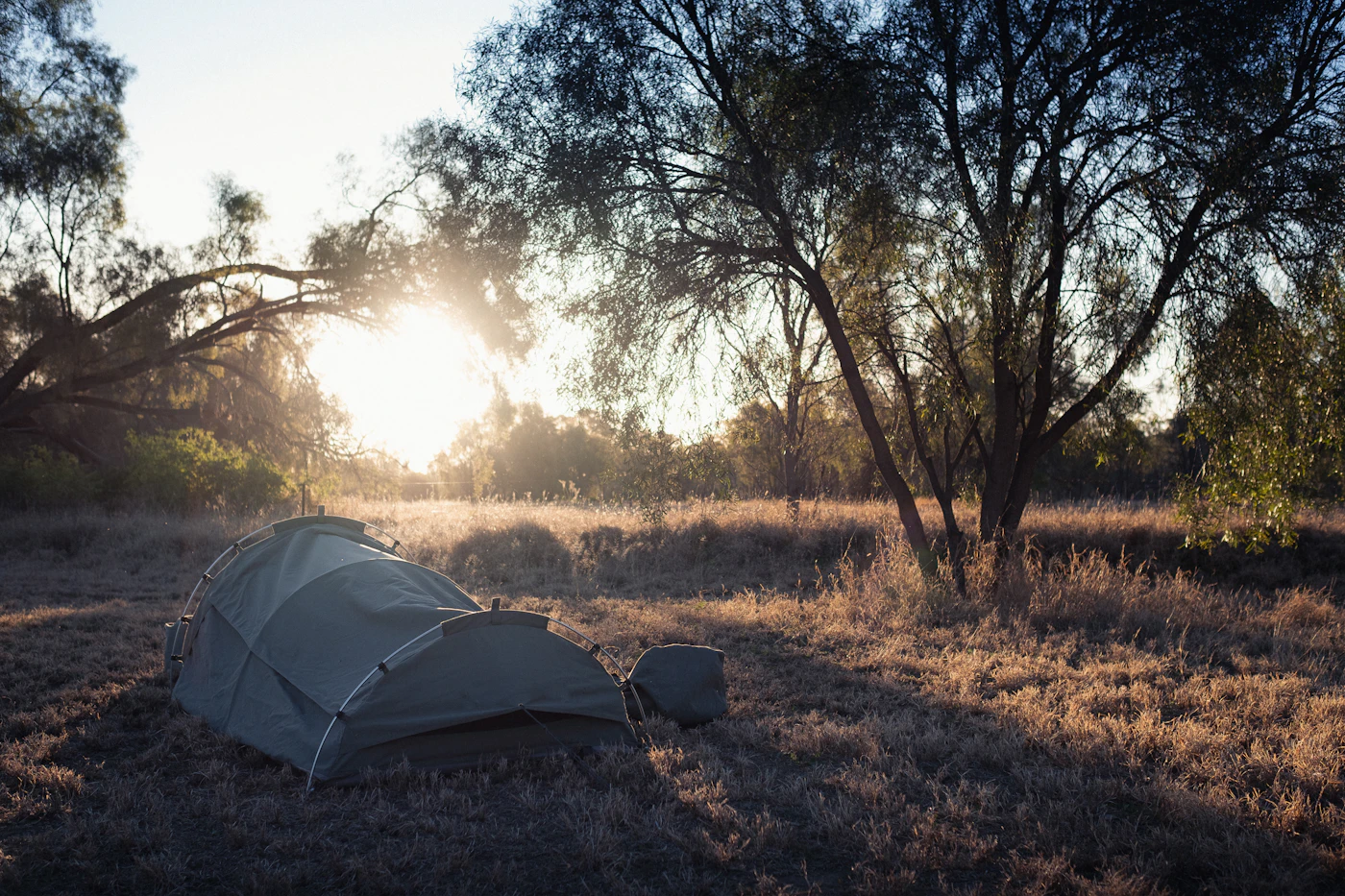
Plan the local part
Start with the specific campground: check its facilities, booking requirements and access with DBCA. Then decide what shelter, water storage and cooking equipment your group needs to bring. Check current restrictions again before leaving.
The trip before the kit
Choose the campground before choosing the kit. Water, fires and facilities vary—even within the same reserve.
Bookings are essential. Sites are unpowered, with pit toilets and a dining shelter. Bring drinking water: seasonal rainwater is not guaranteed and needs treatment. Campfires are not allowed at any time.
Bookings are essential. Sites are unpowered, with pit toilets and dining shelters. Bring drinking water. Fires are permitted only seasonally in provided rings, subject to current restrictions; do not plan a meal that depends on a fire.
Read its booking details and map for space, access and facilities. Do not assume there are showers or that every site suits your vehicle and shelter. Check weather and park alerts again before travelling.
Check warnings first. Practise pitching your shelter, keep bedding and a change of clothes dry, and have a way to pack up or change plans. A wet-weather trip is not automatically suitable just because someone else enjoyed one.
Chuditch prohibits campfires year-round. Baden Powell has seasonal rules and current restrictions can override them. Check the actual campground and current fire notices before leaving.
Different starting points and route options have different distances. The current trail listing describes several variants. Match the exact start, mapped route and complete return distance before choosing; do not follow a single distance without its route context.
Arrange a route and transfers with a local operator for your group, craft and conditions. Do not assume the river is a simple out-and-back. Never attempt to paddle over Bobs Crossing.
Source-checked 20 September 2026. Check current notices before travelling; this is planning advice, not a surveyed route.
Pack, check, go
Adapt this to your route, group and conditions. Ticks stay on this page until you leave or refresh.
0 of 11 checked
Use DBCA's Lane Poole Reserve information to check the specific campground, facilities, bookings, alerts and current restrictions. Do not assume every site provides the same facilities. Match your equipment to what is actually available.
Compare the sleeping mat's insulation, dimensions and packed size, not just thickness. Check how the mat, sleeping insulation and shelter work together. If you are sharing transport, measure the space available before choosing bulky equipment.
Decide whether you are heating water, cooking a shared meal or doing both. Match pot capacity to the group and meals. Check stove, pot and fuel compatibility with the manufacturer. Check current fire and stove restrictions separately; owning a stove does not mean it can be used on every day or site.
A headlamp frees your hands for individual tasks; a camp light serves a shared area. Compare useful runtime at the brightness you intend to use, rather than peak brightness alone. Check charging connections and how equipment will be recharged between uses.
Give food, cooking equipment, clothing and wet items distinct places. Check what can be shared before buying duplicates. Pack waste storage and the cleaning equipment needed to leave the site tidy, following the park's current guidance.
No. Choose the individual campground on the DBCA website and check its access, facilities and booking details. Build your packing list around that site rather than assuming shared facilities across the reserve.
Check current park restrictions and the campground’s rules before packing. Do not build your meal plan around a fire being available. Stove use can also be restricted; follow the current official guidance for the location and conditions.
Group equipment by task: sleeping, meals, lighting and clean-up. Share suitable items within the group and measure transport space before buying bulky gear. Keep wet equipment apart from dry sleep clothing and leave room for the return journey’s rubbish.
Explore our brands and shop selected equipment online. Check product pages for current options and availability. Our physical store at 2 Marinup Street is opening soon.
Shop selected gear online. Our physical store in Dwellingup is opening soon; contact us before travelling for a specific item. Tell us what you already own, what you plan to do and what is not working for you.
Ask about your equipment
Explore the range / Camping
Bring a sleep system, cooking setup and lighting that work for your particular campsite.
Useful gear for this trip
Check each product page for current options and availability. The physical store is opening soon; contact us before travelling.